Last updated November 23, 2026
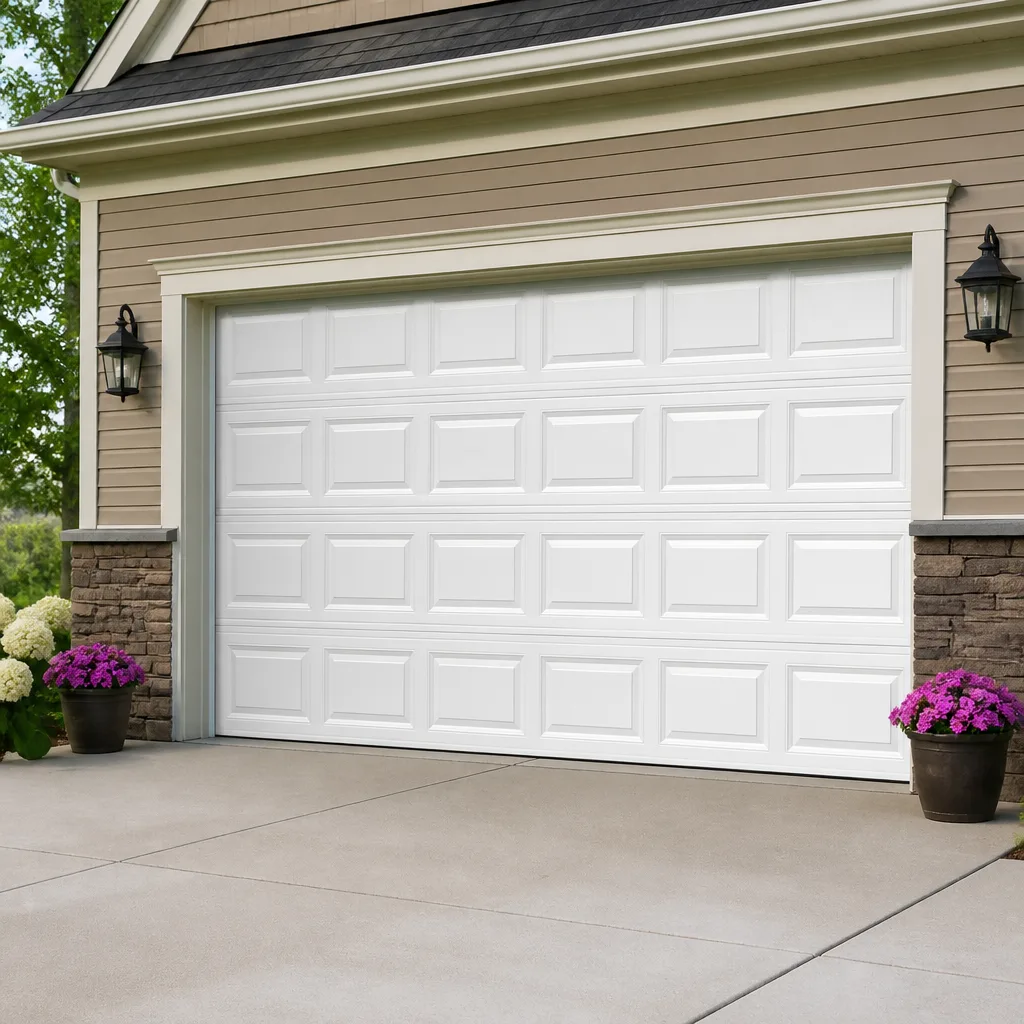 Raised-panel steel
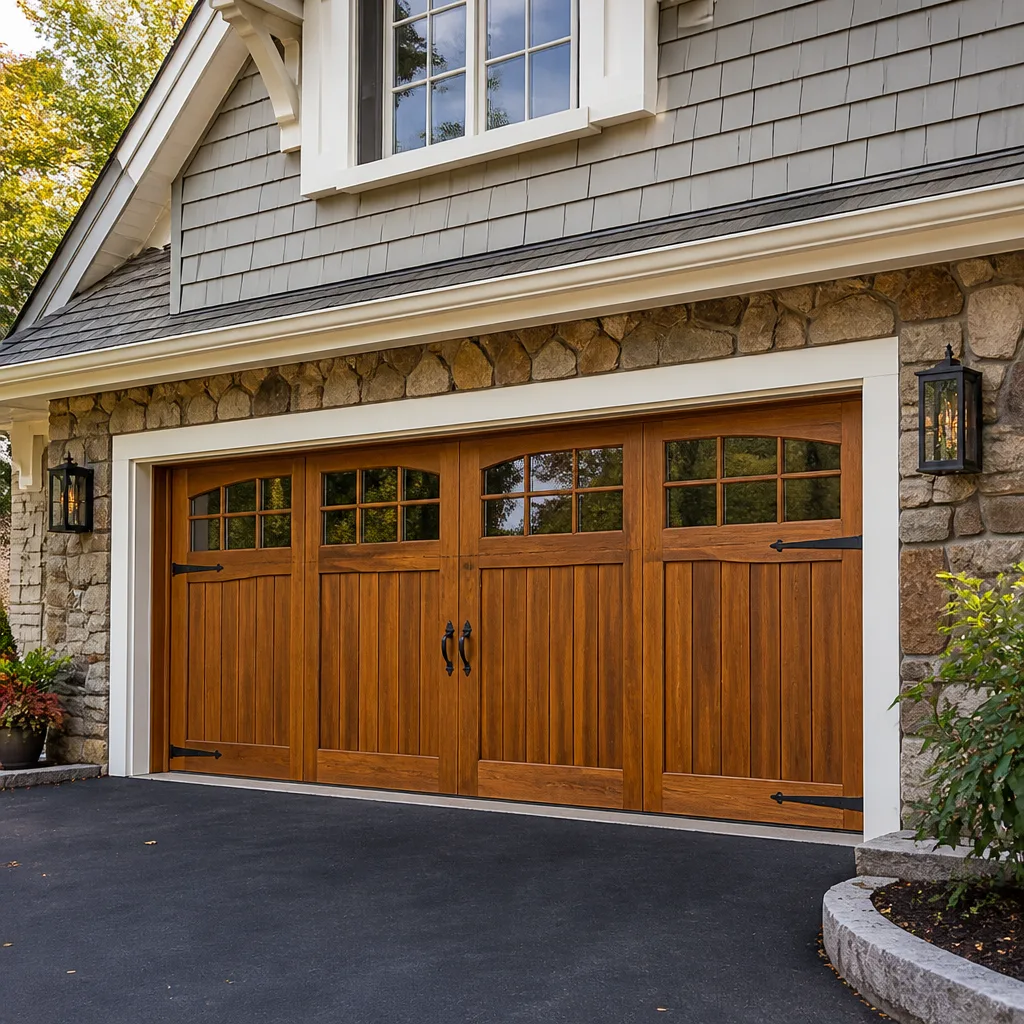 Carriage house
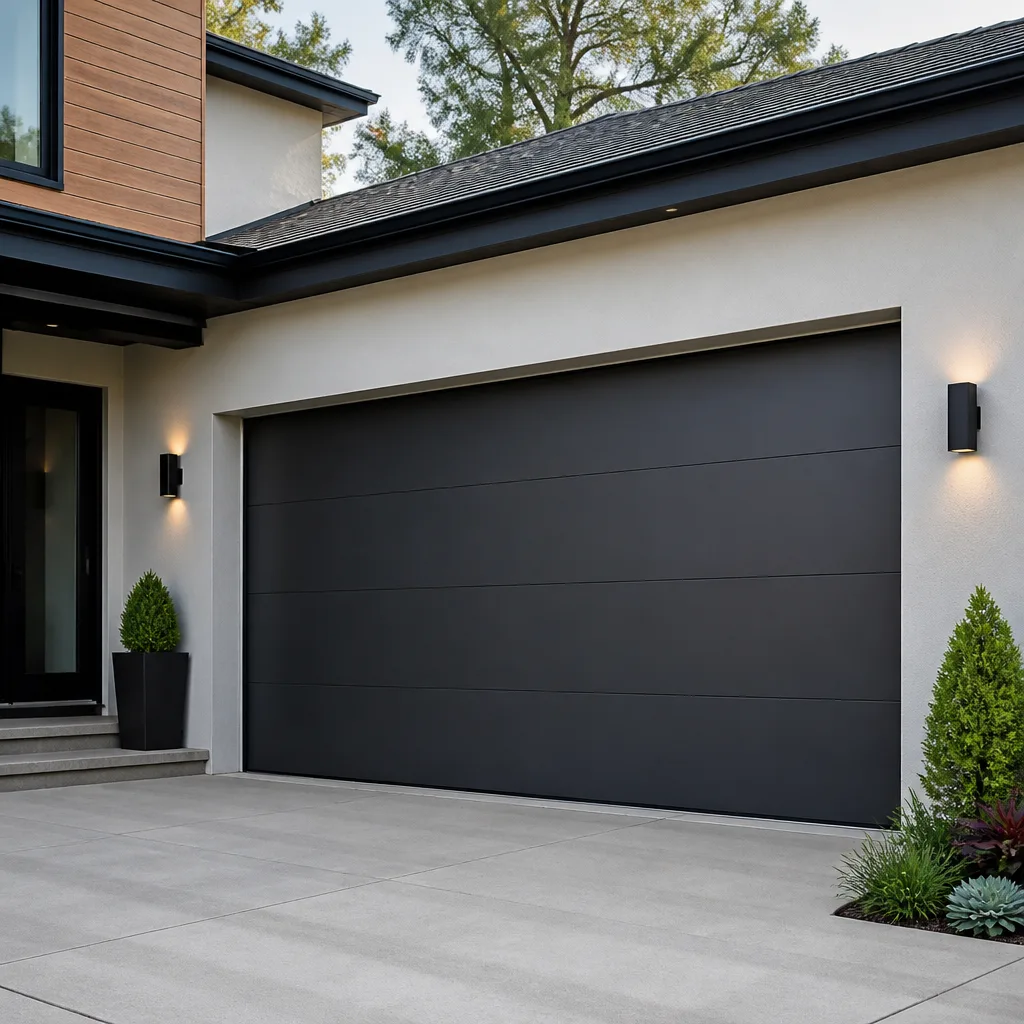 Modern flush
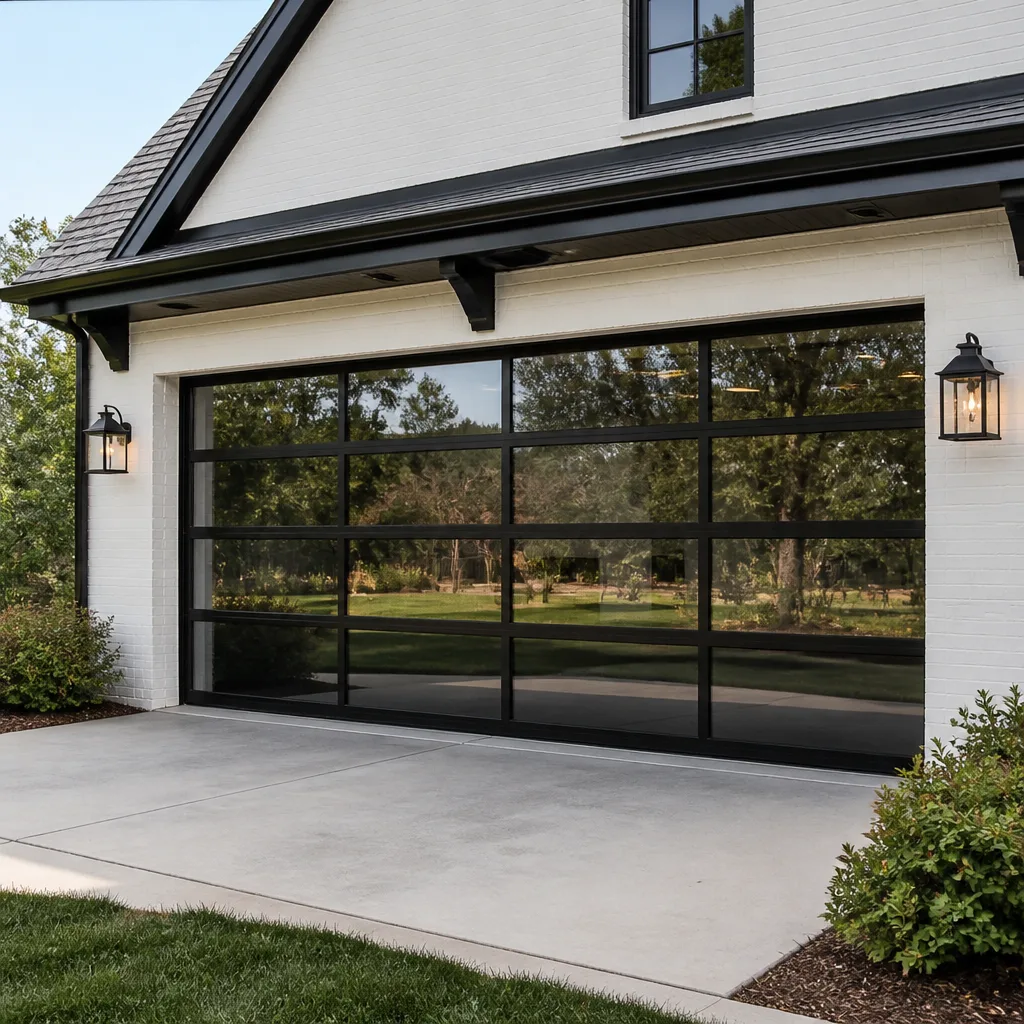 Full-view glass
 LiftMaster openers
 Chamberlain openers
Full 25-point door and opener safety check with every visit - springs, cables, rollers, tracks, and your LiftMaster or Chamberlain opener included
You get a price before we start. It does not change when the pro arrives.
Get your free estimateDIY vs Professional Garage Door: The The Heights Homeowner’s Decision Guide
Here’s a pattern that catches capable homeowners off guard. Someone who has swapped a light fixture, a faucet, and a thermostat figures a garage door bottom seal is the same kind of job. Usually it is. But lower the door with the seal half off and the cable can slip its drum, and suddenly a $30 rubber strip has become a two-spring, cable, and bracket job. The gap between a small home repair and a mechanical system under load is real, and it isn’t the one most guides describe. This guide walks through The Heights garage doors task by task, so you can see where the risk really sits.
Quick Answer
Some garage door tasks are genuinely safe to do yourself: bottom seals, weatherstripping, remote programming, and light exterior cleaning. Most structural, spring, cable, and opener-safety adjustments belong with a trained professional because they involve stored mechanical energy that can cause serious injury if it releases unexpectedly. In The Heights, the safe split comes down to one test: if the task touches anything under spring tension or changes the travel, balance, or safety-reversal of the door, bring in a specialist.
Styles & brands we work with
- Raised-panel steel
- Carriage house
- Modern flush
- Full-view glass
- LiftMaster openers
- Chamberlain openers
Table of Contents
- The DIY-to-Pro Spectrum: Where Each Task Lands
- Tasks You Can Safely DIY With Basic Tools
- Tasks That Look DIY-Friendly but Require Calibration Knowledge
- The Honest Cost Comparison: What You Save and What You Risk
- What The Heights Has to Say About Permits and Liability
- How to Be a Useful Collaborator on a Professional Job
- Simple Maintenance That Reduces the Chance of a Breakdown
- When the Answer Is Clear: Enlisting a Specialist
The DIY-to-Pro Spectrum: Where Each Task Lands
Most DIY guides split garage door work into two buckets: safe or unsafe. That brevity leaves out the middle of the spectrum, where a lot of real jobs actually sit. In our experience working on The Heights doors, most of the expensive mistakes come from tasks that straddle the line – not obviously dangerous, but not truly simple either.
Here’s how we think about it:
- Safely DIY: Bottom seals, weatherstripping, exterior paint touch-ups, opener remote programming, control-panel battery swaps, and tidying the door’s visible hardware. These involve minimal tools and no stored energy under load.
- Yes with caution (and the right information): Roller replacement on non-tensioned components, hinge replacement on the panel side of the door, lubrication of hinges and tracks, track cleaning, and photo-eye realignment after a bump. Read the door’s manual first and know exactly what you’re touching.
- Pro recommended: Track realignment beyond a light nudge, opener limit switch adjustment, limit-switch tuning on Raynor and Chamberlain openers, opener force calibration, and any torsion or extension spring work. Also cable replacement and bracket work.
- Professional only, no exceptions: Torsion spring replacement, extension spring replacement, cable and drum work, bottom-bracket adjustment, and any adjustment that changes tension on the counterbalance system.
The rule underneath the list: the further you move from the outer skin of the door toward the counterbalance mechanism, the higher the risk. Everything on the outside is metal, rubber, and paint. Everything under tension is stored energy waiting for a chance to release.
Tasks You Can Safely DIY With Basic Tools
The safe DIY zone is real, and it’s bigger than some specialists suggest. There are jobs around a The Heights door that any reasonably capable homeowner can do correctly on a Saturday at their own pace, with a screwdriver, a utility knife, and a bit of patience. We’d rather you save money on the simple things so that more of your budget is available when the door actually needs expertise.
- Replacing the bottom seal. Slide the old rubber out of the retainer, measure the new one generously, and trim after test-fitting. A universal seal from any hardware store works here as long as the profile matches the retainer style.
- Adding weatherstripping to the door frame. Vinyl bulb or brush-style stops run along the sides and top. Glue or tack in place with the door closed so the seal sits snug against it.
- Programming remotes and keypads. Every major opener brand has a learn button or a menu on the head unit. Follow the brand instructions and you’re done in minutes.
- Changing opener light bulbs. Use a bulb rated for your opener’s wattage – oversize bulbs burn out quickly and can overheat the housing.
- Wiping down tracks and hardware. A damp rag and a light pass with garage-specific lubricant go a long way. Avoid heavy grease, which traps grit.
- Exterior touch-up painting. Steel doors in The Heights pick up scratches and chips from kids’ bikes and winter boots. A rust-inhibiting touch-up is fine to do yourself.
If you’re reasonably handy, these belong on your to-do list when you have a couple of free hours, not on a repair bill. Save the phone call for the tasks that actually need it.
Tasks That Look DIY-Friendly but Require Calibration Knowledge
The dangerous part of DIY garage door work isn’t just the springs. It’s the tasks that appear simple until a calibration error shows up weeks later as a door that reverses mid-travel, opens unevenly, or drops faster than it should. Those are the jobs where “it works” isn’t the same as “it’s safe.”
Limit switches and opener travel
An opener’s limit switches tell the motor where the door should stop at the top and bottom of travel. Turn them a hair too far and the door pushes against the floor, strains the opener motor, or fails to close fully. On LiftMaster and Chamberlain openers, the limit settings are usually alongside the force settings, and moving one often shifts the other. Without a solid understanding of how the two interact, a “quick adjustment” can leave the door with an inconsistent stop point that’s hard to diagnose later.
Track alignment
An out-of-plumb track is usually fine to correct with a gentle knock. But once you loosen the bracket bolts to “straighten” the rails, you’re inviting a cascade: the rollers stop tracking properly, panels walk sideways, and the door’s balance gets thrown off. Track alignment on a The Heights door is one of those tasks where the slight fix is fine and the medium fix isn’t, and the line between them is easy to cross without realizing it.
Spring tension adjustments
This is the one that catches people. A sagging door that “just needs a bit more tension” is a door where a wound torsion spring is holding about the same energy as a small car rolling downhill. Touching it with hand tools and without proper winding bars is a serious injury waiting to happen. Even a technician with years on the job treats this as a two-person, trained-hands-only operation. There is no version of spring tension adjustment that belongs in a homeowner’s DIY plan.
Photo-eye alignment
Re-aiming a bumped photo eye is usually simple, but if the beam is misaligned slightly, the door can fail to close reliably – or worse, close with the safety system effectively off. Test the safety reversal with a roll of paper towel every time you touch the sensors.
The Honest Cost Comparison: What You Save and What You Risk
Here’s where DIY vs professional garage door gets interesting. On some tasks, DIY genuinely saves you money. On others, the “savings” is bookkeeping that disappears the moment something goes wrong. An honest comparison is more useful than a broad warning.
| Task | Typical DIY Cost | Typical Pro Cost | What DIY Saves (or Doesn’t) |
|---|---|---|---|
| Bottom seal replacement | $20-$40 in materials | $80-$150 | Most of the bill. Worth doing yourself if you’re comfortable with a utility knife. |
| Remote / keypad programming | $0 | $40-$75 | Worth doing yourself every time. |
| Weatherstripping | $30-$60 | $100-$180 | Worth doing yourself if the trim work is straightforward. |
| Single-panel dent repair (cosmetic filler) | $30-$60 | $150-$300 | Cosmetically fine. Panel replacement is often the better pro route if the damage is structural. |
| Torsion spring replacement (per spring) | Not recommended | $180-$340 (one spring, matched pairs usually replaced together) | No. The savings aren’t worth the risk or the warranty loss. |
| Opener force / limit recalibration | Not recommended | $80-$160 | No. A mis-calibrated opener can damage the door or defeat the safety reverse. |
| Track realignment (minor) | $0 if it’s a light correction | $90-$180 | Sometimes yes. Beyond a light correction, call in help. |
| Cable / drum work | Not recommended | $150-$300 | No. Cables involve loaded tension and are easy to get wrong. |
| Off-track door recovery | Not recommended | $150-$350 | No. A derailed door has loaded springs and can twist unpredictably. |
These are typical The Heights ranges, not exact quotes. Every door is different, and the written estimate sets the final price after we see it.
The takeaway is that you can safely handle the seals, remotes, and weatherstripping. The panel dent you’d use Bondo on, sure – if all you care about is the look. But a botched spring adjustment carries costs the task itself doesn’t show: a wounded hand, a door that won’t close, or a panel that bends when the door drops loose. That’s the trade-off worth naming honestly.
What The Heights Has to Say About Permits and Liability
Permits get overlooked in most DIY conversations, but they matter if you sell your house or file a claim down the road. The Heights follows New Jersey’s Uniform Construction Code, and the township’s building department can tell you exactly which door work needs a permit and which doesn’t. That phone call takes about five minutes and settles the question better than any guide can.
In general, we tell homeowners to ask about permits in a couple of scenarios:
- New door installation or full replacement: Most municipalities require a permit for replacing a garage door, particularly when the door is part of the home’s sealed envelope or when the header or framing changes. Ask the The Heights building department before scheduling.
- Converting a manual door to an opener: Adding an automatic opener where none existed can trigger an electrical permit, and sometimes an inspection requirement. Confirm before booking the install.
- Structural changes to the opening: Widening the door, changing header size, or altering the framing almost always requires a permit and often involves engineered plans.
- Spring or cable replacement: Usually doesn’t require a permit, but there’s no way to know if your original install was code-compliant without a quick check. If the door was installed long before you bought the house, an inspection can uncover issues no one’s touched in years.
Why it matters: unpermitted work can complicate a sale, and if something goes wrong, an insurer may decline a claim on work that wasn’t permitted. A trained professional working under a permit gives you a paper trail and a recourse. Even if you’re confident in the mechanical work, let the paperwork follow the code.
How to Be a Useful Collaborator on a Professional Job
The best value a homeowner can add to a service visit isn’t wrench work. It’s preparation. A clear garage and useful information cut billable time significantly, and they make the job safer for everyone involved. When we arrive at a The Heights home, we can move faster when the space is ready and the door’s history is documented.
- Clear the garage floor and the door’s travel path. Move the bikes, bins, boxes, and kids’ toys. A technician shouldn’t have to rearrange your storage to reach the springs or opener.
- Park outside. Leave the driveway clear and pull cars out of the garage before we arrive.
- Write down what you’ve noticed. When does the door stick? Does it reverse on its own? Does the motor run but the door not move? That pattern is usually the fastest diagnosis tool we have.
- Locate the opener’s manual or model number. Most LiftMaster, Chamberlain, Craftsman, and Raynor models have the model number printed on the head unit’s label. A quick photo saves a lookup.
- Note any recent events. A new paint job, a heavy storm, a bump from a car mirror – small incidents often explain symptoms that seem unrelated.
- Have the door’s age and last service date ready if you know them. Never essential, always useful.
What not to do: don’t loosen bolts, unhook the door, or “help” while the technician is working on the mechanical system. Even a well-intentioned assisting hand on a spring-loaded bracket is a real hazard. Stay near, be available for questions, and let the work happen safely.
Simple Maintenance That Reduces the Chance of a Breakdown
Regular, low-risk maintenance is the best insurance against an emergency call. Almost all of it stays inside the safe DIY zone, and it’s the kind of thing that keeps a The Heights door working through a summer heat wave and a cold snap alike. The desert-climate swing between hot afternoons and chilly nights works the metal, rubber, and lubricants on your door harder than most homeowners realize.
- Lubricate monthly. A light garage-door-specific lubricant on hinges, rollers, and the torsion spring coil reduces friction and keeps the mechanism quiet.
- Test the safety reverse every month. Place a roll of paper towels under the closing door. If the door doesn’t reverse on contact, the safety system needs a professional check.
- Balance test twice a year. Disconnect the opener (pull the release handle) and lift the door halfway. A properly balanced door should stay put when you let go. If it drifts down or up, the springs need adjustment – professional only.
- Inspect the bottom seal for cracks. The rubber dries out in The Heights heat. Small cracks let in dust, water, and sometimes small animals.
- Watch for visible cable fray or sagging. Any sign of fraying or sagging is a stop-and-call situation. Cables under tension don’t fail politely.
- Listen for new sounds. Grinding, squealing, or popping is usually the door telling you something is out of alignment before it fails.
Ten minutes of monthly care is enough. It’s not a substitute for trained repair, but it’s a strong filter that catches problems before they force an emergency call.
When the Answer Is Clear: Enlisting a Specialist
The tasks that clearly belong in professional hands are the ones where the cost of a small mistake is high and the work is genuinely technical. A torsion spring replacement on a The Heights door is a two-person job with proper winding bars – not something to tackle casually. Same for cables, drums, and any adjustment that changes tension on the counterbalance system. And when your door stops moving entirely, the answer is simple: bring in the specialist.
The Heights Garage Door Repair focuses exclusively on garage doors, and we work on Craftsman, LiftMaster, and Chamberlain doors and openers across The Heights. Our technicians have up to 14 years of experience, and we offer emergency service for doors that won’t open or close. We’re open Sunday through Friday, 7am to 7pm, and closed Saturday. Estimates are free, and the price is quoted and agreed before any work begins.
Common Mistakes to Avoid
- Using the wrong winding bars. Standard screwdrivers don’t fit winding cones correctly, and a slipping tool on a loaded spring can injure the person holding it. Use only proper winding bars, or don’t touch the spring.
- Force-adjusting an opener to fix a slow door. A door that lags is usually a balance or spring problem. Raising the opener’s force setting just hides the symptom and adds strain to the motor.
- Ignoring the safety reverse after any adjustment. Any change to the door’s travel or the opener’s settings should be followed by a paper-towel test. A door that closes without reversing could cause an injury.
- DIY on a door that’s off-track. A derailed door has loaded springs and unpredictable motion. Nudging it back into place with bare hands invites the door to twist or drop.
- Skipping the permit call on a new install. Most The Heights installations require a permit. Calling the building department first avoids a fix-it bill later when you sell.
- Replacing one spring when the pair is worn. Matched springs wear at the same rate. Replacing only one leaves the older spring at high risk of failure – often within days of the new install.
- Treating an unresponsive door as an inconvenience. A door that won’t close is a security gap, and a door that won’t open could trap a car. Call in a specialist, not a hair dryer and a YouTube list.
See the difference
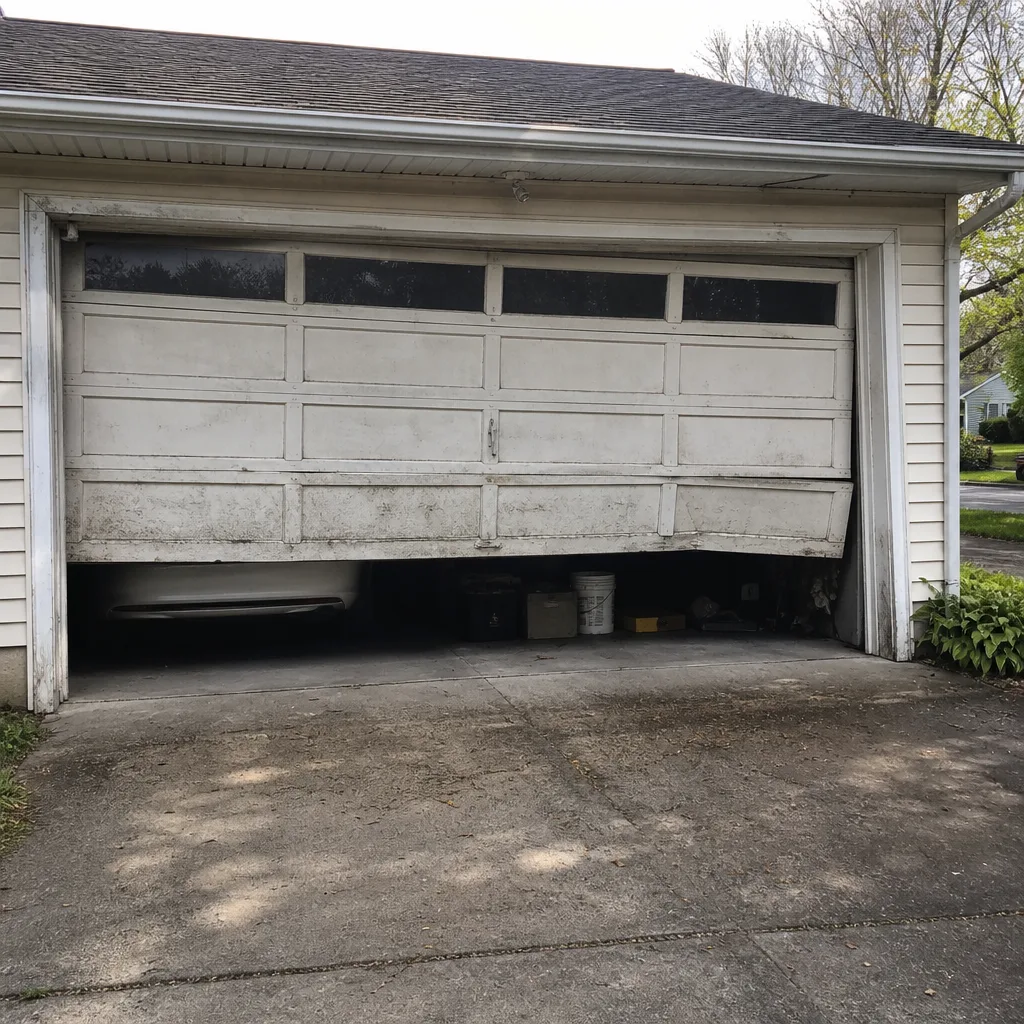 Before
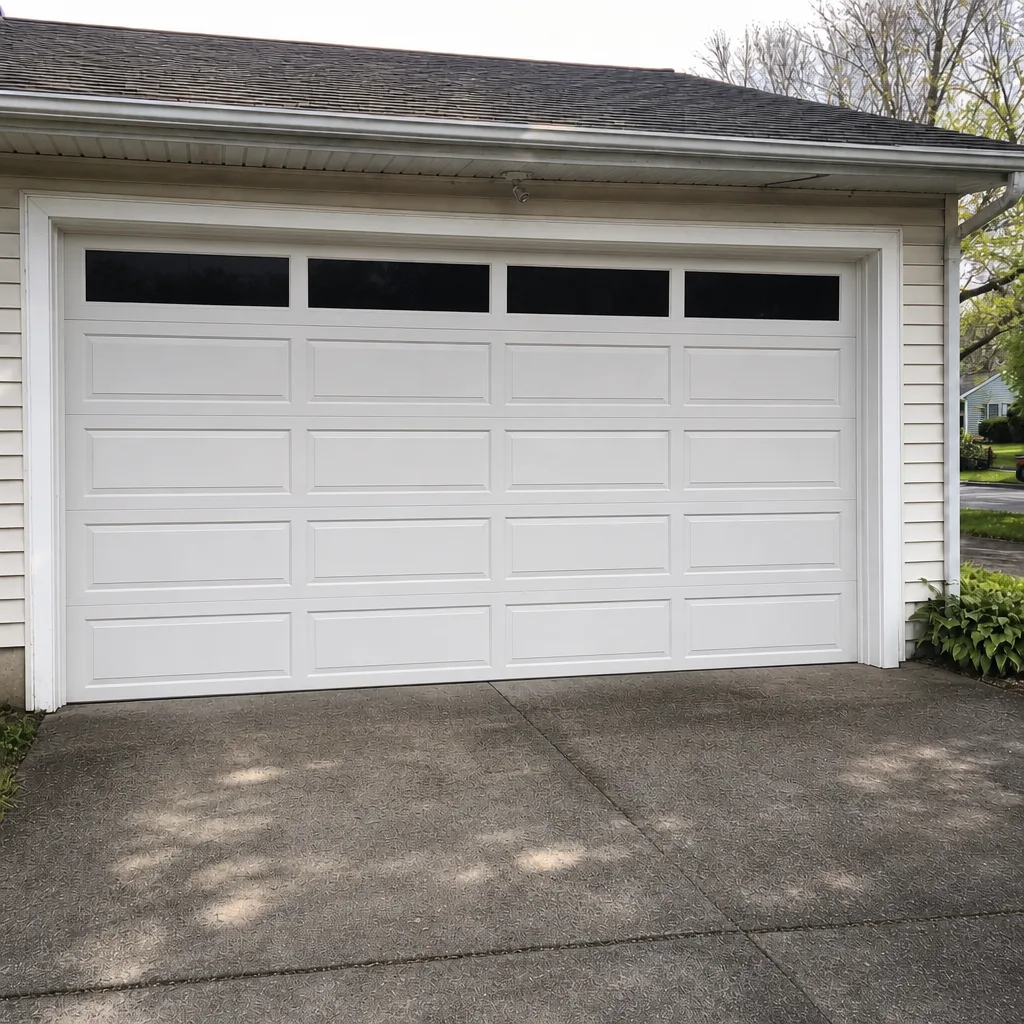 After
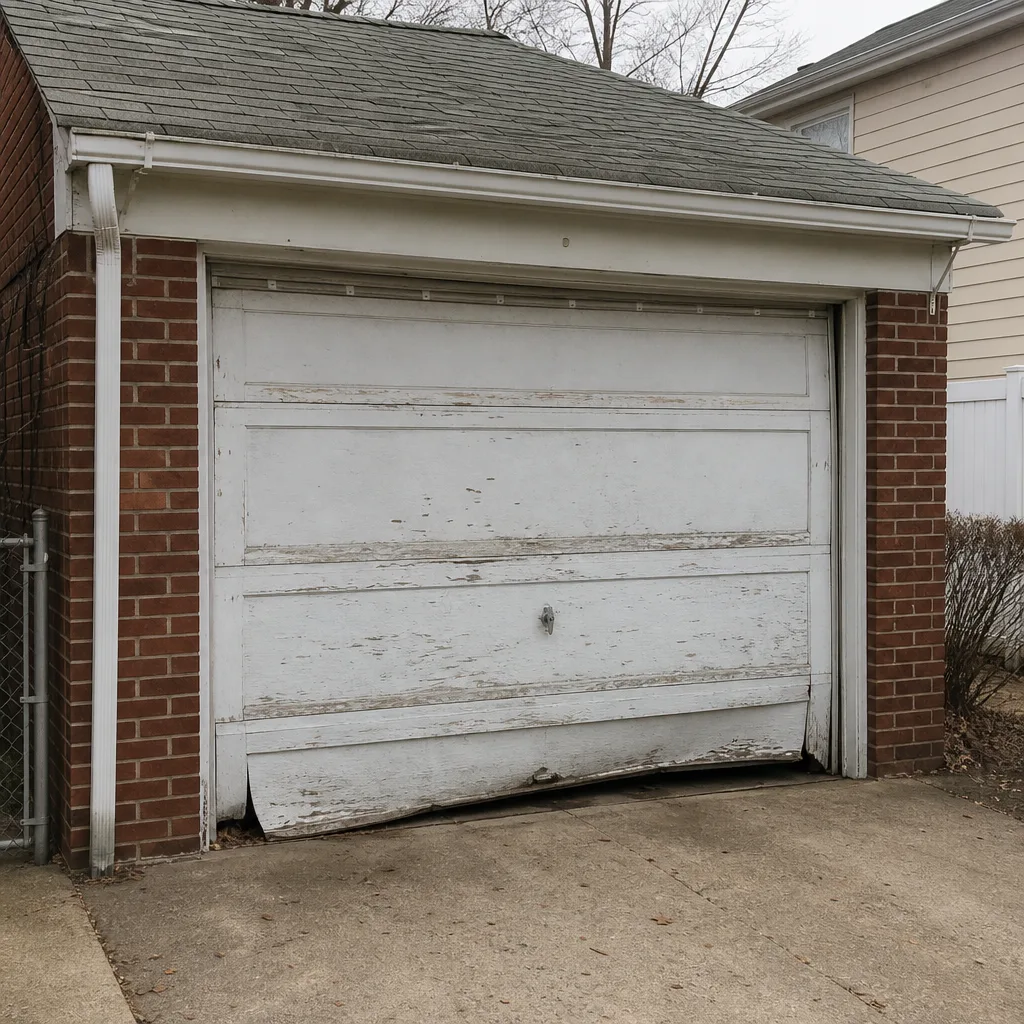 Before
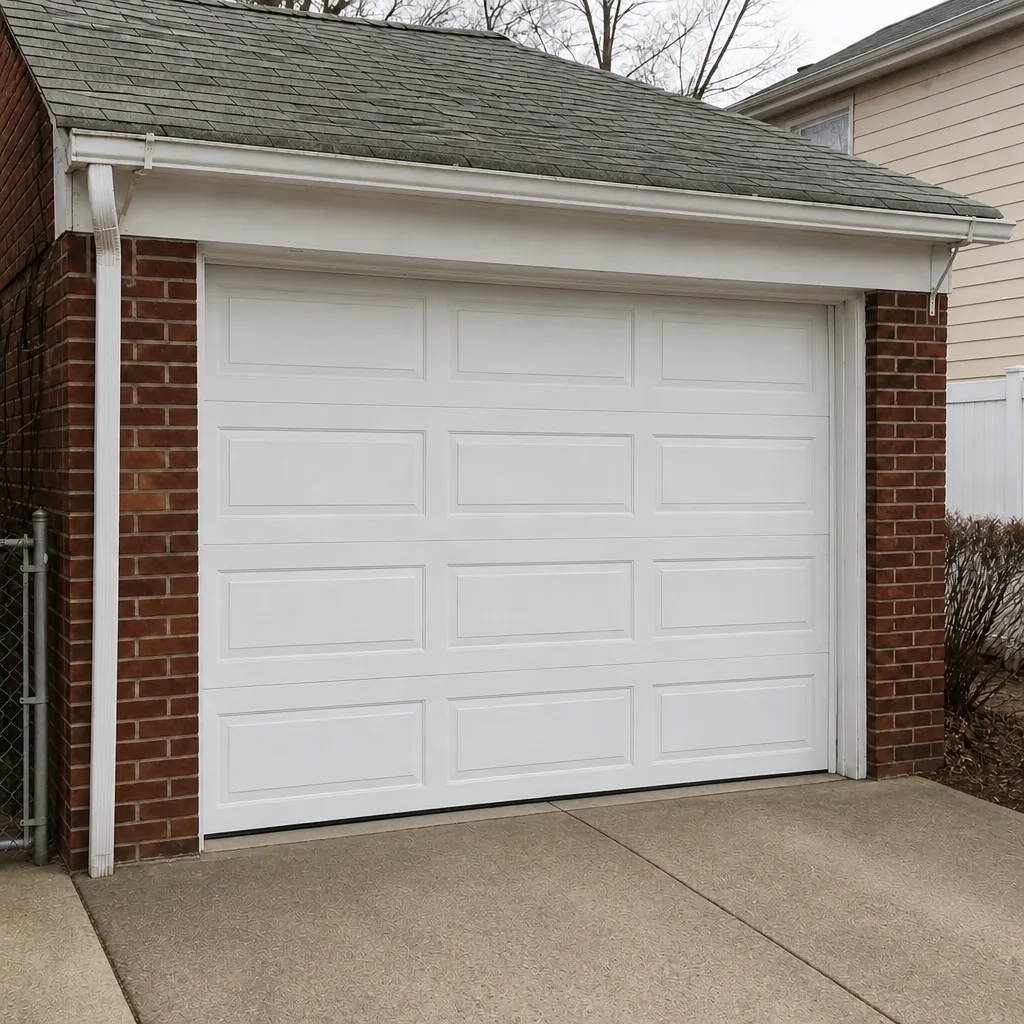 After
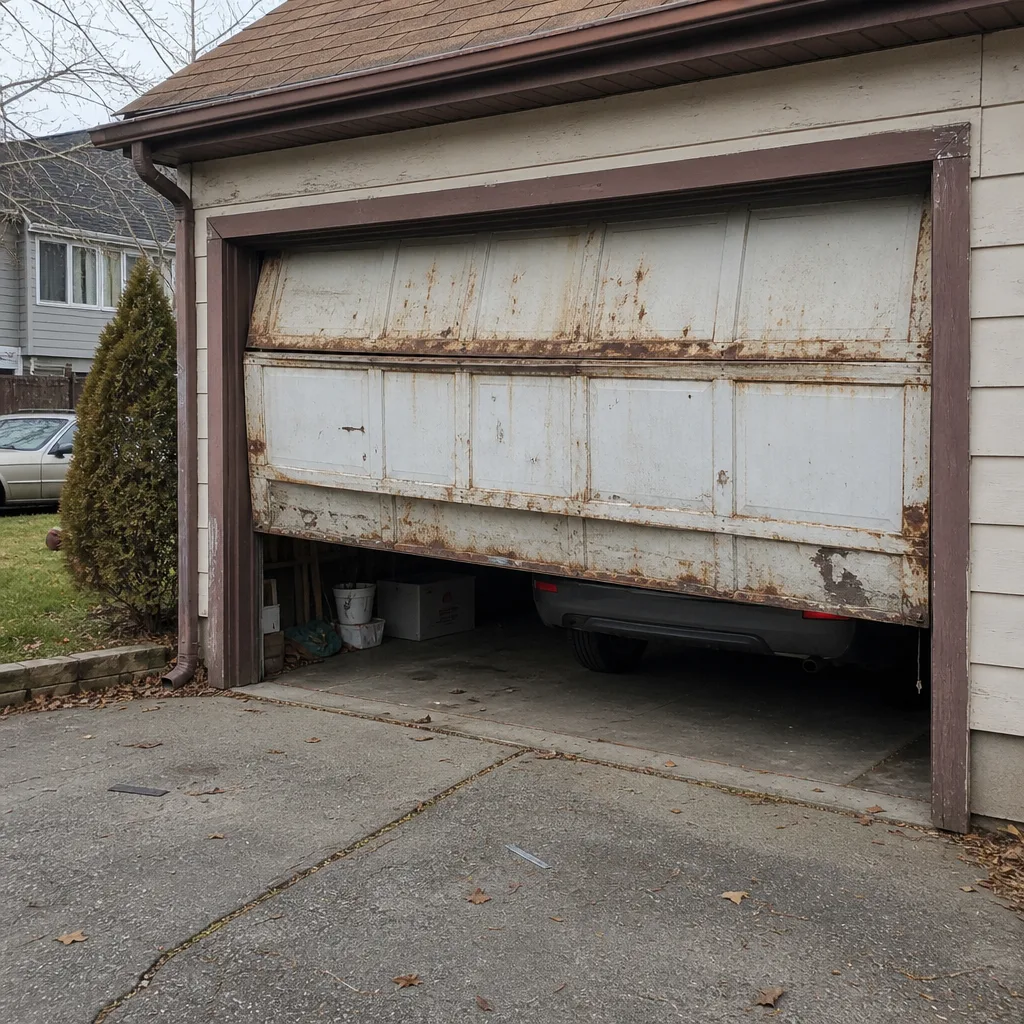 Before
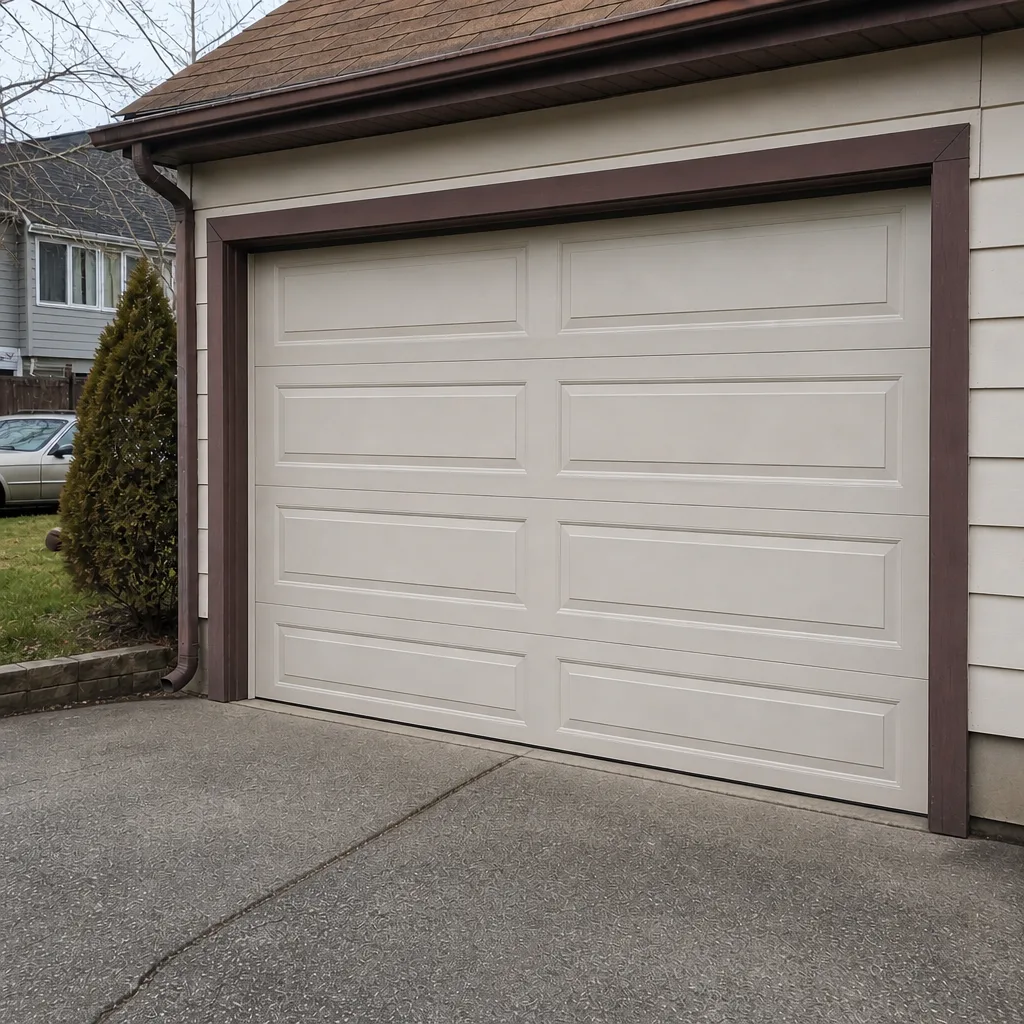 After
When to Call a Professional
Call a professional the moment a task touches spring, cable, drum, or bracket tension, or when the door misfires in a way that suggests a counterbalance or opener safety failure. That includes a door that reverses mid-travel, a door that won’t close, a door that hangs crooked, a snapped spring, a frayed cable, or a remote that no longer responds after a proper battery and programming check. In The Heights, this is also the right call when a door has been sitting idle for a long stretch and the seal, springs, and opener need a full inspection. The Heights Garage Door Repair offers free estimates in The Heights – call (844) 325-8504.
Frequently Asked Questions
No. Torsion and extension springs hold stored energy under tension, and the repair itself is a leading source of serious garage door injuries. The Heights Garage Door Repair handles spring repair as a specialty because the risk goes up sharply without proper winding bars and experience. If a spring has snapped or the door has gone heavy, call (844) 325-8504 for a free estimate.
Bottom seals, weatherstripping, remote and keypad programming, light exterior touch-up painting, and routine lubrication are all safe to do yourself with basic tools. Homeowners who are reasonably handy usually do these well. Anything that changes the door’s balance, travel, or safety reverse is a professional job. If you’re unsure which category a task falls into, call (844) 325-8504 – we’ll tell you honestly.
Usually not when the task involves springs, cables, drums, or opener calibration. The savings on the labor line are real, but a botched spring or a mis-calibrated opener often costs more to correct than the original repair. The DIY savings that make sense are on seals, weatherstripping, and programming, where the risk of a mistake is low. Call (844) 325-8504 for a free estimate on the tasks that belong with a specialist.
The local professionals we connect you with are licensed and insured as their state requires. The Heights Garage Door Repair focuses exclusively on garage doors – springs, openers, installations, and emergency response – and our technicians have up to 14 years of experience. Estimates are free and the price is quoted and agreed before any work starts. Call (844) 325-8504 to schedule a free estimate.
Most towns require a permit for a full garage door replacement, and sometimes for adding an opener where none existed, but not usually for a spring, cable, or roller repair. The Heights building department can confirm the specifics for your address. It’s a five-minute call that saves a headache down the road. If your job needs a permit, we can tell you which category it falls under – call (844) 325-8504 for a free estimate.
Often, yes. Our emergency service is available for doors that won’t open or close, and we’re open Sunday through Friday, 7am to 7pm, closed Saturday. The first step is a phone call so we can understand the symptom and route the right technician. If we can’t reach you today, we can schedule the soonest available visit. Call (844) 325-8504 for a free estimate.
The Bottom Line
DIY vs. professional garage door work isn’t a clean split – it’s a spectrum. Bottom seals, weatherstripping, remote programming, and light cleaning are genuinely DIY-friendly in The Heights and save you real money. Springs, cables, drums, brackets, and opener calibration belong with a trained specialist because the risk of a mistake is high and the cost of an injury or a repeat repair is higher. If you’re unsure which category a task falls into, ask before you touch it. And when the door won’t move, don’t wait – that’s the moment to call in a professional.
For a free estimate on any garage door work in The Heights – from a snapped spring to a full replacement – call The Heights Garage Door Repair at (844) 325-8504. We’re open Sunday through Friday, 7am to 7pm, and closed Saturday. Our technicians have up to 14 years of experience, we work on Craftsman, LiftMaster, Chamberlain, and the other major brands, and the price is quoted and agreed before any work begins.
Written by the team at The Heights Garage Door Repair.